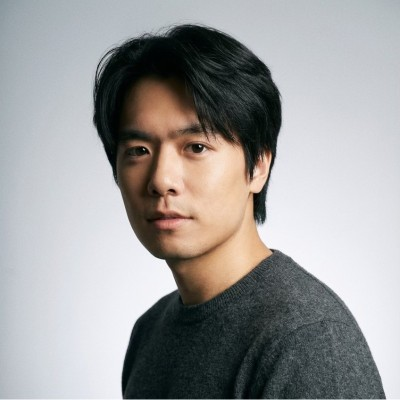
Industrial Engineering student at University of Toronto.
Building intelligent systems at the intersection of
LLMs, cloud infrastructure, and automation.
I'm an AI Application Engineer Intern at Spark Growth, a Toronto-based company driving social media growth and advertising for DTC brands. My work spans Claude API integration, Google Cloud Platform, Python automation, and full-stack data pipeline architecture.
I believe the best technology disappears into the workflow. That philosophy drives how I design every system I build: minimal friction, maximum leverage.
At U of T, I'm studying Industrial Engineering with an AI minor — a combination that lets me think about systems holistically. Whether it's optimizing a database schema or designing an agentic workflow, I approach problems from both the engineering and the intelligence angle.
My deepest technical interests are in LLM-powered agents, RAG systems, and cloud-native architectures. I'm particularly fascinated by how memory and retrieval can make AI systems feel genuinely intelligent — not just reactive.
Outside of work: bilingual in English and Chinese, grinding a Duolingo French streak, and perpetually fine-tuning my Notion setup.
Architected and deployed a production RAG system using the Claude API to parse meeting transcripts, extract action items via NLP, classify tasks by project category, and assign them in the CRM — processing 100+ meetings/week at 95% classification accuracy, saving 20+ hours/week of manual effort.
Built a webhook-driven automation pipeline integrating Calendly with Productive CRM on GCP Cloud Run, automating company/contact creation, deal generation with industry mapping, and duplicate detection — handling 50+ bookings/week end-to-end. Engineered 15+ Google Apps Script automations for cross-platform data sync, reducing manual reporting time by 45%.
Pursuing a degree at the intersection of systems thinking and AI — with a minor in Artificial Intelligence & Engineering Business. Coursework spans ML, Deep Learning, NLP, Database Systems, Operations Research, Optimization, and Data Structures & Algorithms. Actively preparing for ML Engineer and LLM Application roles with a structured technical interview curriculum.
Architected a full-stack LLM-powered analytics system enabling natural language querying of social media creative performance data (Instagram, Facebook, LinkedIn) for DTC brand clients. Built a normalized Cloud SQL schema for creative metrics, a FastAPI + Claude API tool-use backend, and explored Vertex AI vector embeddings for semantic retrieval and text-to-SQL latency optimization.
Built a webhook-driven automation pipeline on GCP Cloud Run integrating Calendly with Productive CRM — automating company/contact creation, deal generation with industry mapping, and duplicate detection. Handles 50+ bookings/week end-to-end with zero manual intervention.
Developed a multi-user data export application on GCP Cloud Run with FastAPI, featuring Google OAuth 2.0 authentication, role-based access control, and seamless exports to Google Sheets and CSV — enabling the team to self-serve reporting without engineering support.
Designed and containerized a FastAPI microservice with MLflow-registered models for real-time and batch fraud inference. Orchestrated a multi-service architecture via Docker Compose, enabling rapid local simulation of production ML pipelines. Implemented model versioning and deployment registry following reproducible MLOps best practices.
Developed a hybrid BERT + CNN model for multimodal personality inference. Applied data augmentation and prompt tuning to address class imbalance. Reduced training time by 60% leveraging CUDA-enabled GPUs (RTX 5090) and optimized batch loading pipelines.
Built a scalable SaaS-style platform supporting real-time enrollment for 500+ courses with a Java RESTful API and interactive frontend. Implemented RBAC for 3 user roles, enabled real-time availability via WebSockets (reducing booking conflicts by 40%), and optimized SQL queries by 45% through indexing and join restructuring.
Led a team to design a demand-driven scheduling system across multiple customer zones. Extracted spatial-temporal demand patterns and built forecasting models (Random Forest) with constrained optimization (cvxpy) to create order allocation plans under limited capacity — improving service level by 34%.
Developed discrete-event simulations in SimPy to model system capacity, routing, and cycle times under fluctuating demand. Performed bottleneck analysis using Pandas/NumPy, and optimized resource allocation strategies with SciPy — reducing overall system operating cost by 60% through scenario-based planning.
Beyond the terminal, I find myself drawn to the quiet geometry of everyday life — light on concrete, strangers mid-motion, the negative space between things.
Click any image to view full screen.
Music as a different kind of system design — where the constraints are time, tension, and texture rather than latency and throughput.